
Artist Residency Guatemala
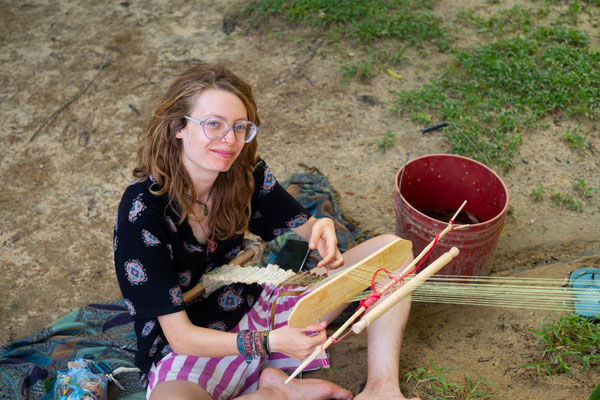


I wanted to do an artist residency in. Guatemala because of the backstrap weaving that the country is known for. I had done a course in backstrap weaving in the past and it appealed to me because of the slow pace of the techniques and the fact that it is possible to weave outside.
Since your body becomes part of the loom, it forces you evenmore to be in the moment, present with your work. During this time, I explored backstrap weaving with biomaterial strokes. Trying to find my own language on this loom inspired by the weaving techniques found in Guatemala.
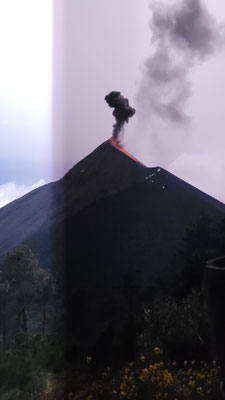
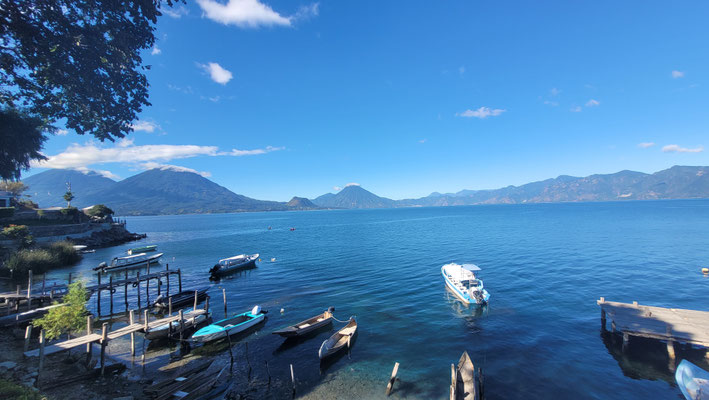
During my time in Guatemala, I mainly observed tourism in contrast to the state of health of the land and the people, especially the indigenous people.
It is a complex subject, since on one hand the tourism brings money to a country that is poor and has a quite resent history of civil war and genocide, and on the other hand, this tourism is part of the cause of climate change that has a huge effect on this country and mainly the indigenous people.


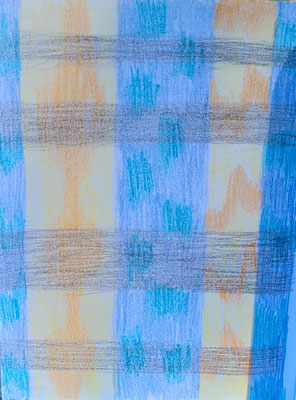

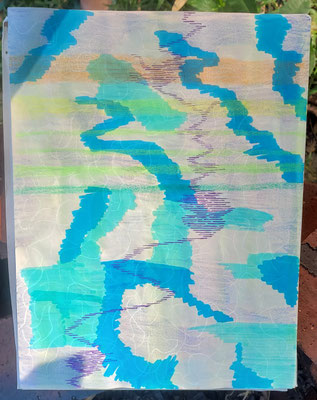

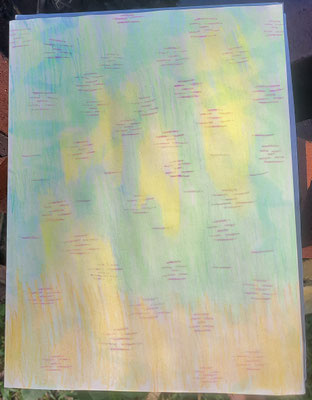
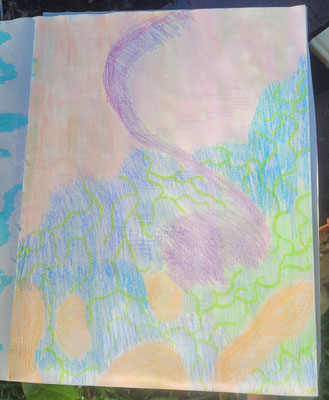
For me, the backstrap weaving symbolizes slow mindfull traveling. I would like to open a conversation about how we travel as the western world with these works. Why do we travel and is it enough to be aware of our priviliges while we travel? What do we take home with us and how do we treat it?
The Mayans use symbols in their textiles to tell stories, mainly about their surrounding nature. Unfortunately the meaning behind a lot of these symbols has been lost. But they are still used and adjusted to follow trends. Each mayan village has its own textile language through techniques, material, shape and colour.
For my artworks, I want to develop my own symbols to tell my perspective.

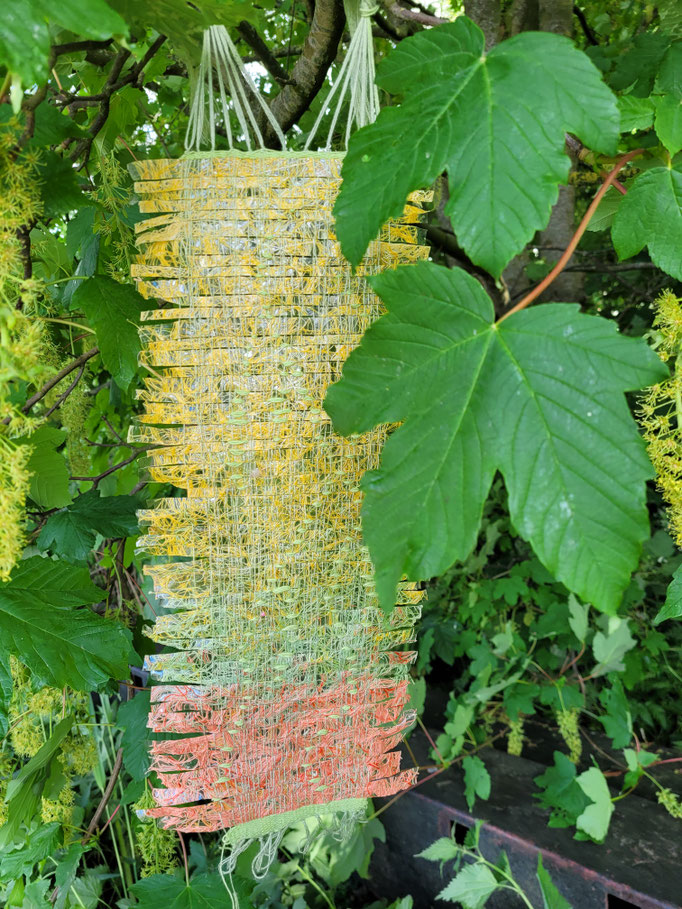

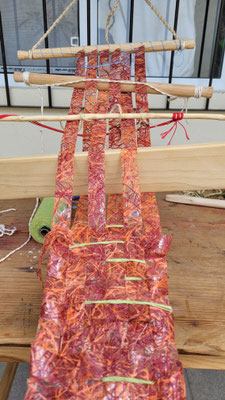
3 Gezusters (sisters)
2026, 35cm x 12cm
bioplastic-waste-yarn material and secondhand yarn
woven outside on a backstrap loom